How to Choose the Perfect Location for Your Cafe
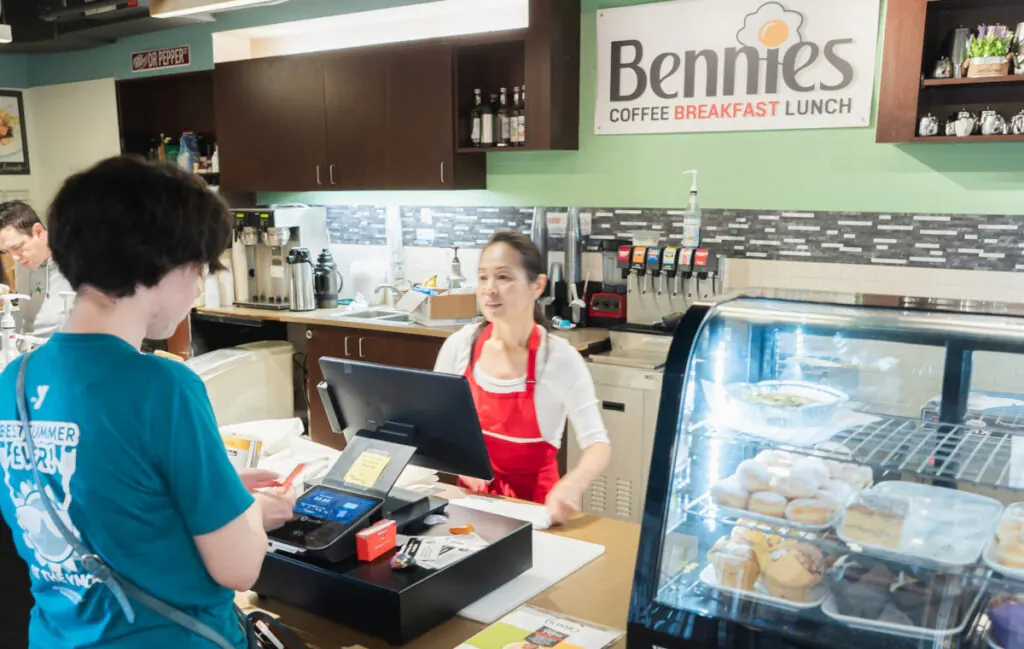


A cafe can survive a weak logo, a limited opening menu, even a slightly awkward floor plan. It rarely survives the wrong address.
People often talk about coffee quality, interior design, branding, or social media, and all of those matter. But location sets the ceiling for almost everything else. It shapes your daily foot traffic, your rent burden, your labor model, your opening hours, your average ticket size, and the type of customer relationship you can build. A brilliant operator in a poor location spends years compensating. An average operator in a strong location gets room to learn.
That is why choosing a site for a cafe is less about finding a charming corner and more about matching your business model to real patterns of human movement. The best locations are not simply busy. They are busy with the right people, at the right times, for the kind of cafe you want to run.
Start with the concept, not the property
A common mistake is falling in love with a vacant unit before the business model is clear. Large front windows, exposed brick, and good light can distract you from harder questions. Who is your core customer? What dayparts matter most? Are you building a neighborhood cafe, a commuter stop, a brunch destination, or a hybrid coffee-and-food operation?
Each of those models needs a different location.
A morning-led cafe thrives where people already move quickly: near train stations, office corridors, school routes, hospitals, or dense residential streets feeding into business districts. A brunch-heavy cafe needs enough dwell time and enough customers willing to queue, which usually points toward lifestyle retail districts, mixed-use neighborhoods, or areas with weekend pedestrian culture. A destination cafe can work in a less obvious location, but only if the brand, product, and experience are compelling enough to pull people in on purpose.
The location should support your strongest revenue window. If 65 to 75 percent of your projected sales depend on the morning rush, being tucked away half a block off the main flow can hurt more than lower rent helps. On the other hand, if your model depends on lingering customers, pastries, lunch, and repeat neighborhood trade, being directly on the fastest commuter route may not be ideal. You can have plenty of passing traffic and still miss your customer.
I have seen operators sign beautiful spaces because they imagined what the cafe could be, not because the area wanted that version of it. The mismatch usually appears within the first few months. The room looks right, the product may even be good, yet the crowd arrives at the wrong times, spends too little, or never forms a repeat habit.
Foot traffic matters, but context matters more
Many landlords and brokers lean hard on footfall. They are not wrong to mention it, but raw traffic counts are often misunderstood. Ten thousand people passing by each day means very little if they are moving too fast, are on the wrong side of the street, have no reason to stop, or do not match your price point.
A useful site visit is not one quick walk-through at noon. It is repeated observation across different times and days. Stand outside in the early morning. Come back at lunch. Visit after school lets out. Return on a Saturday. Watch where people come from, how quickly they move, whether they carry shopping bags, strollers, gym kits, or laptops. Look at where they hesitate, where they cross, and where they naturally pause.
If possible, count manually for 15-minute intervals. It sounds basic because it is basic, and it works. Count how many people pass. Count how many glance at nearby food businesses. Count how many actually enter them. This gives you a rough conversion picture, which is far more useful than hearing that the street is “very active.”
A cafe that depends on impulse trade needs visible frictionless access. If a customer has to make a deliberate detour, cross a difficult intersection, or guess whether you are open, many will keep walking. This is especially true before 9 a.m., when convenience outranks curiosity.
Learn the rhythm of the neighborhood
Every strong cafe location has a rhythm. The area wakes up, peaks, softens, rises again, and fades. Your job is to see whether that rhythm fits your operating plan.
Business districts can produce powerful weekday breakfast and lunch sales, then go quiet at weekends. Residential neighborhoods may build more slowly in the morning but support repeat custom across the day. University areas can be excellent for volume but often swing with the academic calendar. Tourist zones can deliver high traffic but inconsistent loyalty and stronger seasonality.
A site that seems mediocre on one visit may be excellent when viewed across a full week. I once watched a corner unit in a mixed residential area and nearly dismissed it after a quiet Tuesday afternoon. The operator who later took it noticed something more important. Between 7 a.m. And 10 a.m., parents, dog walkers, and local remote workers created a dense, recurring customer base. The unit did not need crowds all day. It needed reliable morning regulars and moderate midday trade. The cafe still had a line out the door on weekends two years later.
You want to know not just how many people are nearby, but how often the same people return. Repeat frequency is one of the biggest advantages a cafe can have over other hospitality formats. A restaurant may depend on occasional visits. A cafe can build daily behavior.
Visibility beats charm in many cases
Operators often overvalue atmosphere and undervalue visibility. A romantic side street can work if you are creating a destination and have the budget to market heavily. For most cafes, especially first-time operations, obvious wins.
Good visibility means more than windows. It means customers can quickly understand what the business is, where the entrance is, and whether it feels open and active. You want a clear sightline from a meaningful distance. A customer should be able to register your sign, see people inside, and make an easy decision to enter.
Corners tend to perform well for this reason. They offer exposure from more than one direction and create natural pauses in pedestrian flow. Near-crosswalk positions can also work well because people stop there anyway. But not every corner is equal. Some corners look premium but sit on the “wrong” side of commuter patterns. Watch where queues form at traffic lights and where people disperse once they cross.
A hidden gem sounds attractive in magazine profiles. Hidden rent bills are less charming.
The right neighbors can make the site
A cafe rarely trades in isolation. Nearby businesses shape your traffic, your reputation, and your trading pattern. The best adjacent uses are not always obvious. A gym can drive early trade. A nursery or school can create strong parent routines. Offices bring weekday breakfast and lunch. Independent retail can lengthen dwell time. Medical practices, salons, and co-working spaces often support recurring visits.
At the same time, being directly next to certain businesses can create friction. A venue with late-night noise may damage your morning atmosphere. A row of low-price takeaway operators can anchor customer expectations below your price point. Another specialty coffee shop nearby is not automatically a deal-breaker, but it changes the calculation. Competition can validate demand, yet it can also split a limited audience if the neighborhood is not deep enough.
Look beyond who is there today. Ask what is opening, what is closing, and what kind of tenants the landlord wants in the wider area. A new office building, apartment development, or grocery anchor can transform a street. So can a long period of construction that blocks visibility and access.
Rent is not the only occupancy cost
Many owners focus on base rent because it is the easiest number to compare. That can be expensive thinking.
A “cheap” location can cost far more in weak sales, poor layout, low visibility, and expensive retrofits. An expensive site can be worth every pound or dollar if it gives you consistent volume. What matters is occupancy cost as a share of realistic revenue, not as an isolated figure. For cafes, acceptable ranges vary by market and format, but if rent and related property costs eat too much of your turnover, daily trade becomes stressful very quickly.
You also need to factor in service charges, property taxes where applicable, insurance, waste handling, grease trap requirements if food is significant, utilities, fit-out obligations, extraction work, accessibility upgrades, and legal fees. A second-generation cafe space often saves substantial money because plumbing, electrical capacity, counters, or ventilation may already be suitable. A raw retail shell can look flexible but consume cash at a frightening pace.
I have watched operators negotiate aggressively on monthly rent while ignoring the fact that the unit needed a six-figure fit-out to become functional. That is not prudent. It is tunnel vision.
Access, frontage, and the first ten seconds
Customers decide fast. In a cafe, the first ten seconds matter because many purchases are low-consideration. People are buying caffeine, routine, comfort, and speed.
If the front door is awkward, heavy, or recessed in a way that makes the space feel closed, some people will not enter. If the menu is hard to read from outside, you lose impulse traffic. If the queue blocks the entrance, new customers assume the process is confusing. If the pickup point clashes with dine-in seating, the room feels chaotic even when sales are healthy.
When you assess a location, imagine the entire customer journey before a single espresso is poured. Where will customers see your sign? Where do they pause before entering? Can delivery riders collect without disrupting everyone else? Is there enough pavement width for a short queue? Can a parent with a stroller get in without stress? These details sound small, but together they determine whether people come once or come often.
Parking, transport, and convenience
Not every cafe needs parking, but every cafe needs easy access for its target market. In dense urban neighborhoods, being near public transport can matter more than car access. In suburban markets, lack of parking can quietly cap sales, especially for families or customers buying takeaway food along with coffee.
Transport access should also be viewed from the staff side. A site that is hard to reach early in the morning can complicate scheduling and retention. Delivery access matters too. Can suppliers unload without blocking traffic? Is there somewhere safe and legal for them to stop? A smooth back-of-house operation is part of location quality, even if customers never notice it directly.
The practical test is simple. If someone decides they want your cafe, how many small annoyances stand between that desire and a purchase? Fewer annoyances usually means stronger repeat business.
Demographics are useful, but behavior tells the truth
Demographic data can help narrow an area. Income levels, age distribution, household composition, office density, and daytime population all provide clues. They do not replace observation.
Plenty of neighborhoods with strong income profiles underperform for cafes because residents commute elsewhere, shop elsewhere, or have entrenched habits. Some modest-income areas produce excellent cafe trade because the street culture is active, the local routine supports daily purchases, and there is little quality competition.
You are not only looking for people who can afford your offering. You are looking for people who want it in that place, at that time, often enough to sustain the business.
This is where test trading, pop-ups, market stalls, or short-term kiosks can be revealing. If you can sell coffee and a trimmed-down food offer nearby before signing a long lease, you learn quickly about demand, price sensitivity, and buying patterns. The data will be imperfect, but it is still better than guessing.
Pay attention to what competitors are actually doing
Competitor analysis should be practical, not theatrical. There is no point walking into every nearby cafe and declaring them either terrible or unbeatable. What you need to know is what role they play in the area.
Some competitors are speed-led and capture commuters. Others trade on seating and atmosphere. Some lead with pastry, some with brunch, some with low prices, some with exceptional coffee. Observe their queues, seating turnover, menu structure, and busiest times. Note whether customers stay ten minutes or ninety. Check if they are full only on weekends or steadily busy through the week.
If several cafes in the area are packed, that is often encouraging. It means customers already accept coffee as part of local habit. If multiple sites keep turning over operators, investigate why. It could be poor management, but sometimes the area simply cannot support the concept people keep trying to force into it.
A useful question is not “Can I beat them?” It is “Is there enough unmet demand, or can I serve a distinct occasion better?”
The lease can make a good location bad
A great site with a punishing lease can become a trap. A second-rate site with flexible terms can give you time to learn and improve.
Before committing, review length of term, rent reviews, break clauses, repair liabilities, assignment rights, permitted use, hours restrictions, extraction permissions, signage rules, outdoor seating rights, and whether the landlord has approval over alterations. If your concept relies on early opening, evening trading, food prep, or outdoor tables, those rights need to be clear up front.
Some of the worst openings I have seen had little to do with coffee or service. They came from slow landlord approvals, delayed utilities, blocked consent for equipment, or hidden repair issues discovered after signing.
Professional legal review is not optional here. It is cheaper than trying to escape a bad agreement later.
Red flags that deserve a second look
Some warning signs are manageable. Others should stop you cold. The discipline is knowing which is which.
- A site that looks busy only at one specific hour
- Poor line of sight from the main pedestrian flow
- Major fit-out costs that the financial model treats casually
- Lease terms that remove operational flexibility
- Several failed food businesses in the exact same unit without a clear explanation
Any one of these can still be survivable under the right conditions. Several together usually point to a location that will demand too much from a new cafe.
A practical way to evaluate a cafe site
The most reliable approach is to combine instinct with evidence. Neither is enough on its own. Good operators often have strong gut feel, but seasoned judgment is usually backed by careful observation, not romantic optimism.
Use a simple field process and repeat it across every serious option:
- Visit at least four times across different dayparts and two different days.
- Count passing traffic manually for short intervals and note customer behavior nearby.
- Study neighboring businesses, transport links, and any planned local changes.
- Build a realistic sales forecast, then stress-test rent and fit-out costs against it.
- Review lease and property constraints before negotiating emotionally.
This kind Cafe of discipline can feel slow when you are eager to open. It is still faster than spending the next three years fixing a preventable mistake.
Sometimes the “perfect” location is the one you can actually operate well
There is a tendency to chase flagship addresses. They are visible, aspirational, and often expensive. Yet for many independent operators, the best location is one that allows consistency. You want enough demand to support the business, enough margin to survive slow weeks, and enough operational ease to execute every day without chaos.
That might mean choosing a strong neighborhood site over a famous high street. It might mean taking slightly less frontage in exchange for a landlord who is reasonable and a layout that works. It might mean prioritizing repeat local trade over unpredictable visitor traffic.
Perfection is rarely available. Suitability is.
A well-chosen cafe location gives you leverage. Marketing works better because people can find you. Staffing is easier because the business is steadier. Customers return because stopping by feels natural. The product gets a fair chance to shine because the site does not sabotage it.
That is the real standard. Not whether the space looks good in photos, but whether it supports a profitable routine. When a location aligns with your concept, your customer, and your economics, the business has something precious from day one: momentum.
Bennies Cafe
17230 Jackson Creek Pkwy Ste 100, Monument, CO 80132
+1 719-445-0660
FAQ About Cafe
What is considered a café?
A café is generally an informal place to enjoy refreshments and a meal. Bennies Cafe in Monument serves breakfast and lunch in a counter-service setting, with options including eggs Benedict, sandwiches and crepes. Guests can eat in or arrange pickup.
What is the difference between a coffee shop and a café?
The terms often overlap. A coffee shop usually emphasizes coffee and other drinks, while a café may offer a broader food menu. Check the individual establishment's menu rather than relying on its name. Bennies Cafe offers coffee drinks alongside breakfast and lunch dishes.
What is the difference between café and coffee?
In everyday English, a café is a place where people buy food and drinks, while coffee is the beverage. The word café comes from the French word for coffee. Bennies Cafe serves options such as brewed coffee, espresso and lattes as part of its drinks menu.